
How Much Does a Custom B2B Website Cost in 2026?

How Much Does a Custom B2B Website Cost in 2026? (The Real Agency Pricing Breakdown)
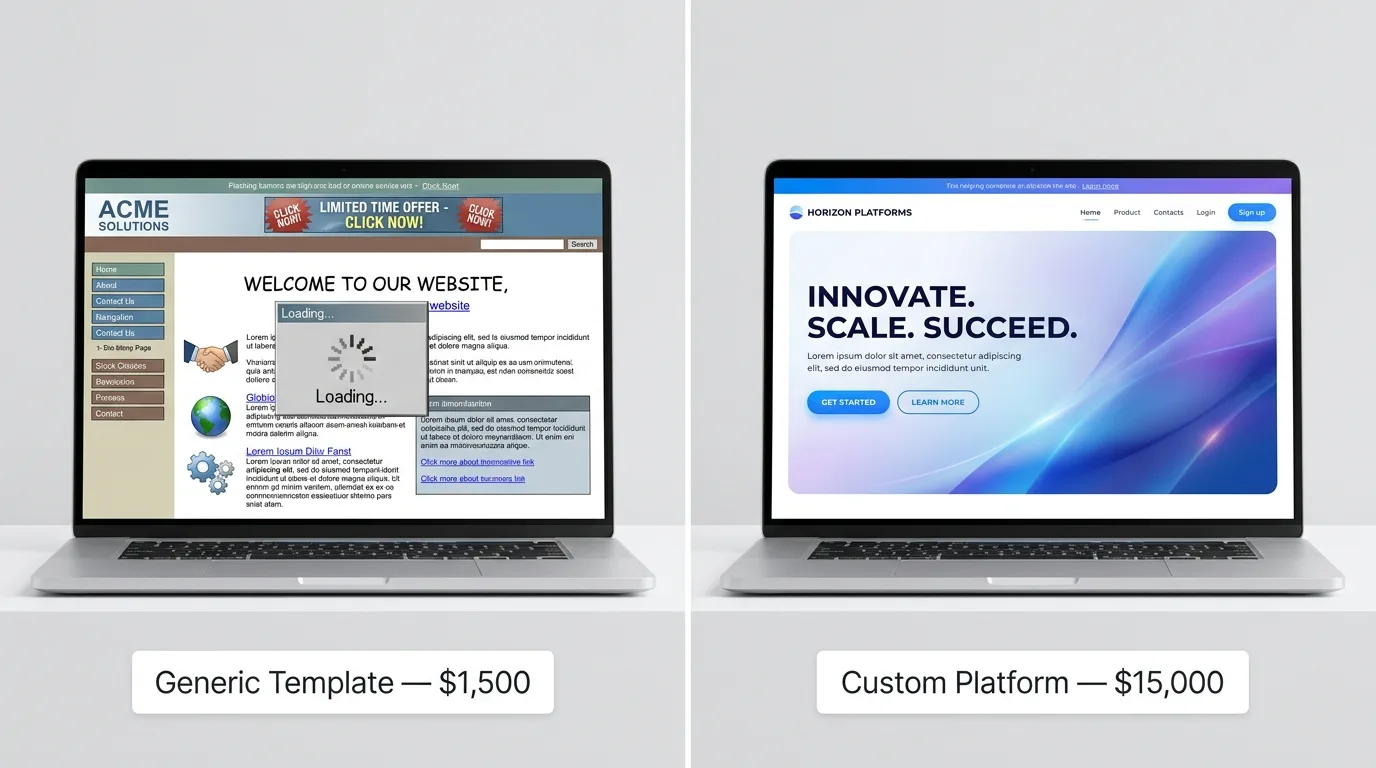
You've probably gotten two wildly different quotes for your company website by now.
One freelancer quoted you $1,500. A full-service agency quoted $50,000. Both said they'd build "a professional website for your business." So which one is actually telling the truth?
Here's the honest answer: neither number means much on its own. What matters is what you're actually getting for it. A website can sit on your domain as a digital business card, or it can work as hard as your best salesperson — generating leads while you sleep. The price gap between those two outcomes isn't random. It comes down to exactly what's being built, and this guide breaks down every dollar of it.
Quick Answer: The 2026 B2B Website Cost Matrix
Here's what you should realistically expect to pay in 2026, and what each price tier actually gets you.
Tier | Price Range | What You're Actually Getting |
|---|---|---|
Tier 1: Basic Template Site | $1,500 – $3,500 | A pre-made WordPress theme with your logo and colors swapped in, 5–8 pages, no custom development |
Tier 2: Custom B2B Growth Platform | $5,000 – $15,000 | A website designed around your brand, built on modern code, optimized to turn visitors into leads, with core integrations included |
Tier 3: High-Performance Enterprise Platform | $18,000 – $45,000+ | Fully custom architecture, advanced automation, CRM and payment integrations, client portals, and dedicated performance engineering |
Bottom line: Tier 1 is an expense. Tier 2 and Tier 3 are investments that pay you back — and the gap between the two outcomes is much bigger than the gap in price.
Why Is There Such a Massive Difference in Price?
Think about buying a car for a second.
A used commuter car and a precision sports car will both technically get you from point A to point B. But one is built purely to be cheap. The other is engineered to perform, hold its value, and outlast everything else on the road.
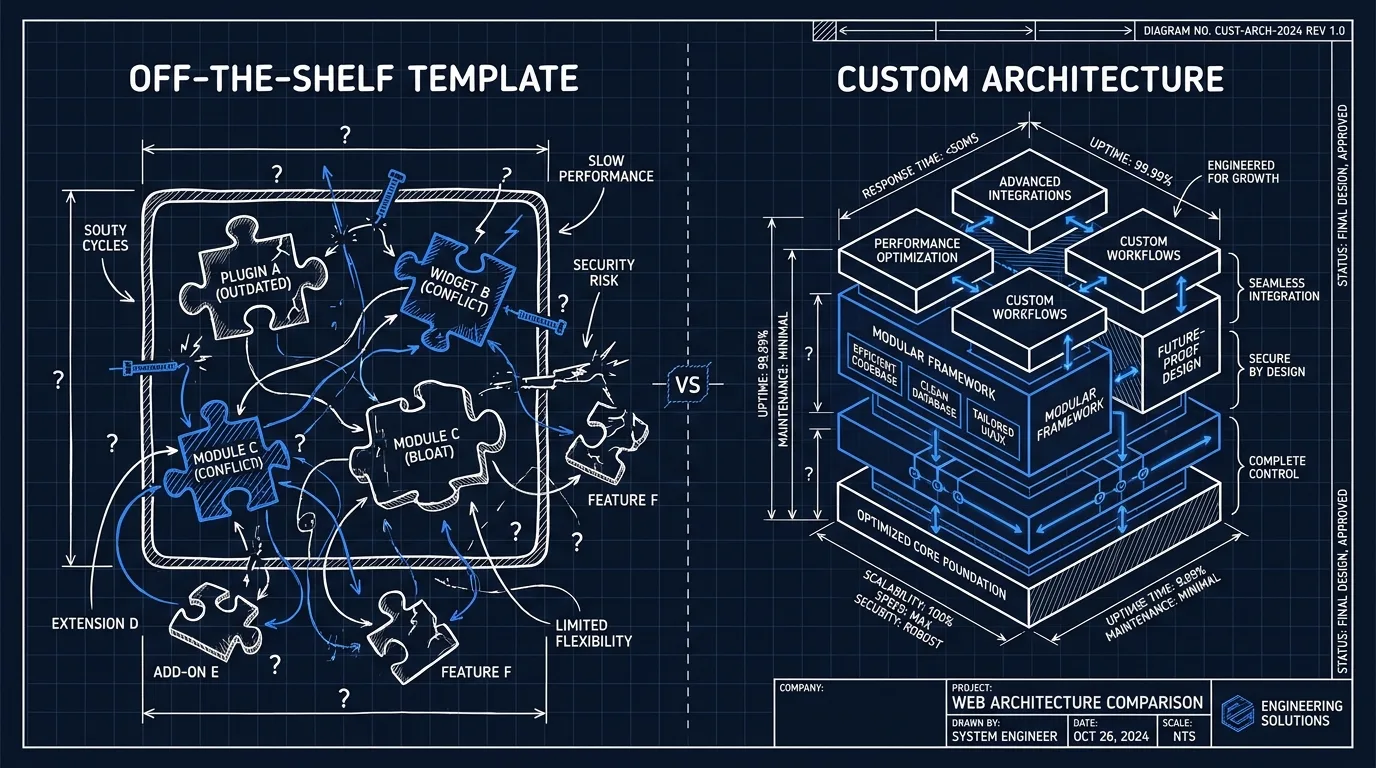
It's the same with websites. A $1,500 template site and a $15,000 custom platform both "have a homepage." One is stitched together from generic parts nobody designed with your business in mind. The other is built and fine-tuned specifically to turn the people who visit it into paying customers.
The 5 Major Factors That Drive B2B Website Pricing
1. Custom Design vs. Cookie-Cutter Templates
A template forces your brand to fit inside someone else's layout choices. Custom design starts from scratch in Figma, built around how your buyers actually think and what makes your competitors look outdated by comparison.
This is where modern design touches — like glassmorphism, bento-style layouts, and subtle motion — come in. They're not there to look pretty. They keep visitors on the page longer and make your company look like the obvious, credible choice the moment someone lands on it.
2. The Tech Behind It: Modern Code vs. Outdated WordPress
WordPress runs on a patchwork of plugins — usually 30 or more stacked on top of each other just to make basic things work. Every one of those plugins is a possible slowdown, a possible security hole, and another monthly bill.
A modern stack — Next.js, React, and Tailwind CSS — skips all of that. It's lighter, faster, and doesn't depend on third-party plugins to function properly. This one decision affects your price and your website's performance more than anything else on this list.
3. Whether the Site Is Actually Built to Convert
A template site talks about your company. A custom-built site is designed around one question: what does someone need to see, and in what order, before they're ready to pick up the phone?
That means every form, button, and section is placed with intent — not a "Contact Us" button dropped wherever it happened to fit.
4. How Fast It Loads (And Why Google Cares)
Google now factors page speed directly into your search ranking. A typical WordPress build loads in 5 seconds or more. A properly built modern site loads in under a second, with a perfect performance score well within reach.
That gap doesn't just affect how visitors feel using your site — it can be the difference between ranking above or below your competitor for the exact searches your buyers are typing in.
5. Whether Your Website Talks to Your Other Tools
Bigger clients expect your website to connect to the systems you already use — your CRM, Stripe, internal dashboards, automated lead routing. A template can't do this cleanly, no matter how many plugins you bolt on. Custom development builds these connections properly from day one, so your website becomes part of how you actually run your business, not just a page that sits next to it.

The Hidden Costs of "Cheap" Websites
That $1,500 quote never shows you the real bill. Here's what usually shows up over the next year and a half:
Over half of mobile visitors leave if a page takes more than 3 seconds to load — meaning traffic you paid for through ads or SEO disappears before the page even finishes rendering.
Ongoing "fix it" invoices, often $150–$300 a month, every time a WordPress update breaks something or a plugin gets compromised.
The 18-month rebuild trap — template sites age fast. Most businesses end up rebuilding from scratch within two years, paying the full cost all over again.
Add it all up, and the "cheap" website usually ends up costing more than the custom one it was supposed to save you from.
How to Actually Calculate Your Website's ROI
Most business owners think about website cost on its own. The smarter way to think about it is against the revenue it's capable of bringing in.
Here's a simple example:
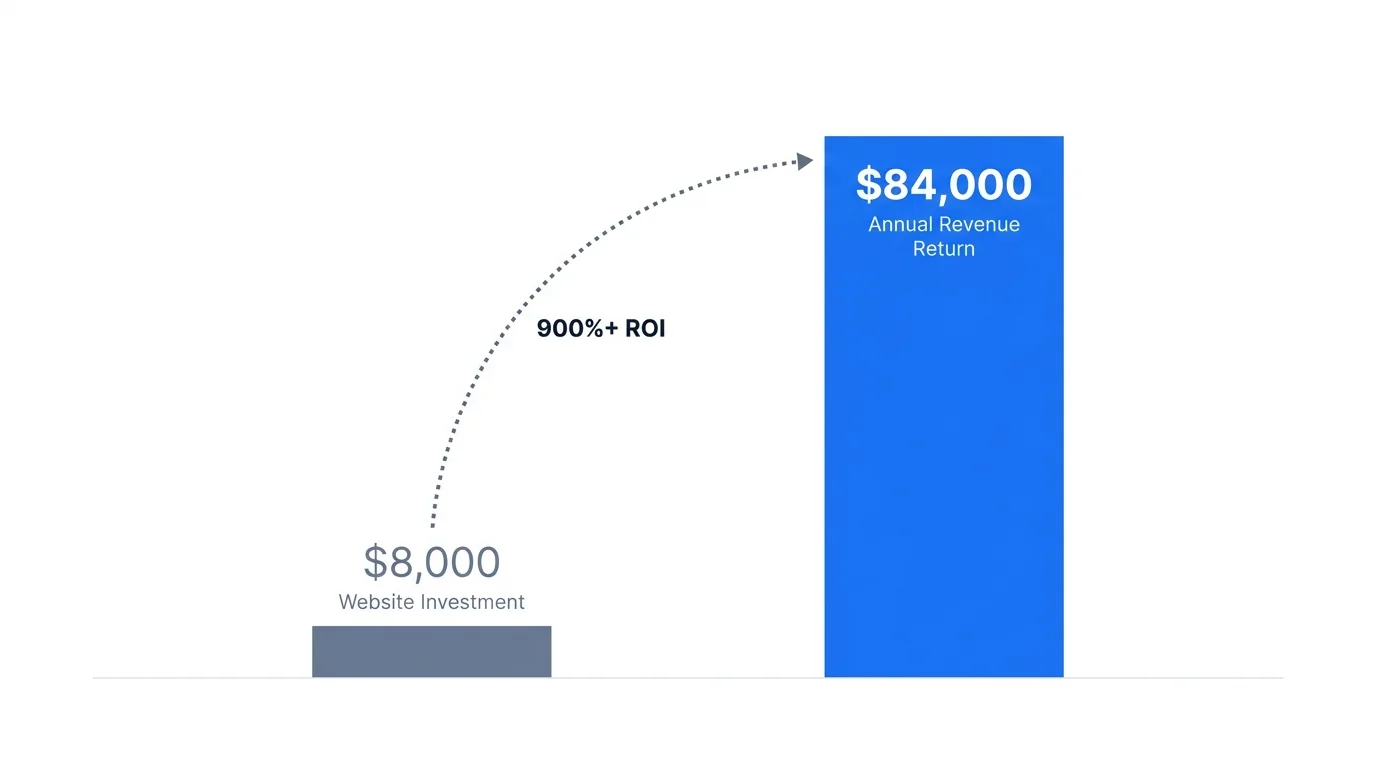
Average deal value: $3,500
Extra qualified leads generated per month from a properly built site: 2
Extra revenue per year: 2 leads × 12 months × $3,500 = $84,000
Website investment: $8,000
Return: over 900%
That's a number a $1,500 template site was never built to produce — because it was never designed to convert visitors into customers in the first place. It was just designed to exist.
5 Questions to Ask Before You Hire a Web Agency
Before you sign with anyone, get straight answers to these five questions:
What will this be built on, and why? If the answer is "WordPress" with no real reasoning behind it, you're likely paying Tier 2 prices for a Tier 1 build.
What page speed are you guaranteeing? A serious agency will give you a real number, not just a promise that it'll be "fast."
Do I own everything when the project is done? You should walk away owning the code and design files outright — not locked into paying them monthly just to keep your own site running.
What's actually included, and what gets billed later? CRM and payment integrations are often quietly left out of the initial quote.
Can you show me a site you built over a year ago that's still fast today? This one question weeds out agencies that build to impress in the demo, not to last.
Ready for a Transparent Proposal?
At Sajlog, we build custom websites and full-stack platforms for businesses across the US, UK, and Canada — built on modern, fast code, not stitched-together templates.
Every project starts with a clear breakdown: what you're paying for, what it's built on, what speed we're committing to, and what it's actually going to do for your business. No vague monthly retainers. No plugin dependency. No rebuilding from scratch two years from now.
Get a clear, honest proposal for your project at sajlog.com.
Ready to Build a Website That Actually Gets You Clients?
Fixed scope. 2-week delivery sprints. 100% intellectual property ownership with zero monthly subscriptions.
Related Engineering Guides

SaaS Development Company: How to Choose the Right One

Website Maintenance Services: What's Included & Costs in 2026
